
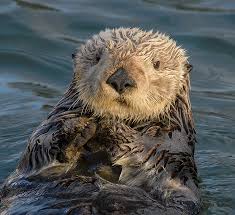
The otter is an interesting, carnivorous mammal that has been hunted for its pelts and used by humans to aid fishing in places like Southern Bangladesh. There are 14 known species of otter which are semi-aquatic and are both freshwater and marine. It appears in various mythologies like Norse and North American mythology.
Physically, the otter has short limbs and slim bodies with powerful webbed feet and sharp claws, that are excellent for fishing. Like a seal, it possesses the ability to hold its breath underwater. Notably, the sea otter is the only one of these mammals not to have a long, muscular tail.
Depending on the type of otter, its size ranges from 2.0 to 5.9 foot and can weigh up to around 99 lb in weight. The smallest otter is the Asian, small-clawed otter and the largest are the Giant otter and the Sea otter. An otter has very soft, insulated fur which is protected by an outer layer of long guard hairs which serve to trap air, keep them dry and warm, and buoyant under water. They are generally, also very playful using natural slides and amusing themselves with stones.
The gestation period of the otter varies from 60-80 days with the young remaining in the family for around a year. They have longevity and can live up to 16 years. Their diet is mainly composed of fish, shellfish and sometimes frogs, birds and eels – depending on the species. However, they rarely attack humans unless they are provoked.
An otter lives in a den that is called a holt or couch while male otters are called dogs or boars, females bitches or sows and the offspring are called pups or cubs. Collective nouns for otters are: Bevy, family, lodge or romp. The holt is built under tree roots and sometimes lined with moss and grass.
After two months, a pup can actually swim. It is cared for by the bitch, dog and older offspring. A female otter becomes sexually mature before the male, 2 and 3 years respectively.
Food is very important to an otter with most of them hunting 3 to 5 hours each day, and nursing mothers hunting for up to 8 hours a day. A Eurasian otter, for example, must eat 15% of its body weight each day while the Sea otter (depending on the water temperature) needs to consume 20 to 25% of its bodyweight daily.
The otter is an active hunter, chasing prey in the water and scouring the beds of rivers, lakes and seas for food. Most preside near water but some like Sea otters use stones to break open shellfish on their bellies. Otters are largely solitary though some live in groups.
As already mentioned, humans have long posed a threat to otters through hunting with arrows, darts, nets, snares, traps and guns. People have coveted their pelts and tails which have been used for men’s clothing. Fur has even been used to make mittens for children.
So, otters are a fascinating part of the animal kingdom and every effort should be made to preserve them and enable them to flourish.
* Ref Wikipedia