Haddock
The haddock is a saltwater fish that is a food source we are all familiar with. But in this short article, we are going to take a look at its interesting life and physical makeup.
Although this species of fish, is found in the eastern Atlantic, it is most profuse in the English Channel and off the Faroe Islands near Iceland. It lives at depths of 80 – 200 metres and prefers to be in waters with a temperature of 39-50 F. However, males prefer to spend time in waters further offshore.
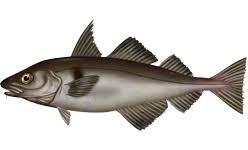
Physically, its protracted wedge-shaped snout is notable, and it possesses 3 dorsal fins and 2 anal fins. The upper side of its body is dark grey to nearly black whilst the lower part of its body is silvery white. The largest recorded haddock was 37 inches in length and weighed 24 pounds; most examples are usually 12 and 27 ½ inches in length.
Some more facts for you: The male of the species is sexually mature at around 4 years of age, whilst females mature later at 5. The ratio is 1:1. A female has a varying amount of eggs with spawning taking place at 200 – 500 feet. The lifespan of this fish is roughly 14 years.
The diet of the haddock changes as it develops and it goes on to prey on smaller fish and sand eels. It itself, is preyed on by seals, and also provides a home for parasites such as worms.
The haddock is indeed, an important food source for humans. The main fishing grounds are in seas around Iceland and the Faroe Islands and in the English Channel, but it is often caught in mixed-species fishing. It is fished all year round and its stock are considered sustainable, although, Greenpeace have raised concerns regarding the impact of bottom trawlers on the marine environment.
The fish is popular as part of a fish supper in the UK, and it is the main ingredient in Norwegian Fish Balls. Haddock is preserved by freezing, drying, smoking and sometimes by canning. It is not usually salted.
* Ref. Wikipedia